What kind of book it is
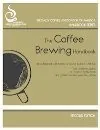
The Coffee Brewing Handbook: A Systematic Guide to Coffee Preparation is a short professional manual published by the Specialty Coffee Association of America. Ted R. Lingle does not attempt to cover coffee cultivation, roasting, and culture with encyclopedic breadth. Its subject is narrower: organizing the available knowledge of brewing to promote excellence and control in the beverage.
The two ISBN listings consulted describe the volume as a compendium of studies conducted by the industry over the previous fifty years and as a scientific explanation of standards and good practices. Amazon and AllBookstores agree on the author, imprint, year, paperback binding, and 60 pages. That concision requires it to be read as an operational codification, not as a modern systematic review of all the literature.
Its historical move was important: treating brewing as a process that can be observed through ratio, temperature, time, concentration, and yield. In food service, that discipline makes it possible to distinguish coffee deficient because of raw material from coffee degraded by dosing, equipment, or maintenance. It also creates a common language for training and quality control.
What can be verified about the contents
No authorized view containing the complete table of contents for this edition has been located. Chapters are therefore not reconstructed, nor are specific tables attributed to specific pages. Open sources allow us to state that the manual brings together brewing science, standards, charts, tables, instructions, and measuring instruments. A contemporary Los Angeles Times profile described it as a text dense with charts and mathematics, intended to revive standards in food service.
The same article summarized seven of Lingle's commandments, but a newspaper piece does not replace the text. It is safe to say that freshness, grinding, ratio, water, temperature, contact, and service formed part of his public framework; it is not safe to reproduce an exact recipe as though it had been checked against a copy. The Gota record avoids that false precision.
The 2020 temperature study explicitly identifies the Coffee Brewing Handbook as one of the vehicles that disseminated a range of 92 to 96 °C and the classic Coffee Brewing Control Chart. That academic citation confirms the connection between the manual and standards taught for decades. It does not prove that every edition or reprint contains identical wording, but it places the work within a recognizable technical tradition.
Measuring strength and extraction without confusing them with taste
The most useful conceptual legacy is the separation of strength and yield. Strength, generally expressed as total dissolved solids, describes how much soluble material is in the beverage. Extraction yield estimates what fraction of the coffee's dry mass entered the water. A beverage can be concentrated without extracting a high proportion of the bean, or more dilute after a high extraction. The ratio of water to coffee relates the two axes.
The classic control chart turned those quantities into a visual tool and defined an “ideal” zone. It was extremely effective for teaching measurement and diagnosis. The problem arises when a zone constructed as an industry standard becomes a universal sensory law. An instrumental reading can describe where a cup sits on the chart; it cannot decide by itself whether a person will prefer more acidity, intensity, bitterness, or body.
The consumer research published in 2021 prepared 27 profiles and collected ratings from 118 mostly young black-coffee consumers. It found two segments with different preferences, strongly related to TDS. This directly challenges a single hedonic zone. It is also a bounded study: one medium-roast coffee, a particular population, and drip preparation do not represent every market or method.
Temperature: mechanism and outcome are not the same
The temperature range taught by the industry has operational utility: equipment that delivers water that is too cool or unstable can produce results that are difficult to repeat. Yet brewing temperature, final strength, and extraction are not independent variables in a real brewer. Raising temperature changes kinetics; changing grind or flow can compensate for the final outcome.
A 2020 study in Scientific Reports compared 87, 90, and 93 °C while adjusting grind and time to equalize TDS and yield. Under those conditions, temperature had little appreciable effect on the sensory profile compared with strength and extraction. This does not prove that every temperature works equally well. It proves that, within that range and when outcomes are controlled, the isolated temperature figure explains less than a rigid rule suggests.
The contemporary conclusion improves rather than destroys the systematic approach: recording temperature remains useful, but it should not be interpreted without flow, grind, time, coffee, and final concentration. The manual opened the door to controlling variables; later science shows that this control requires designs that separate coupled causes.
From one ideal zone to several desirable profiles
The new Coffee Brewing Control Chart of 2023 synthesized 32,076 descriptive measurements and 3,186 liking ratings. Instead of reducing the chart to weak, strong, underextracted, bitter, and ideal, it placed sensory attributes and two preference surfaces on it. The proposal retains TDS, yield, and ratio, precisely the quantities that made the classic framework useful, but removes the claim of a single preference.
This offers a fair way to read Lingle. His contribution is not that every numerical boundary from 1996 must remain intact. It is that he presented brewing as a controllable and communicable system. A standard works as a reference point for identifying deviations, training teams, and repeating results; preference additionally requires tasting, context, and an audience.
A 2020 scientific review of extraction confirms the breadth of relevant variables: time, water, temperature, pressure, particle size, and ratio alter kinetics, composition, and flavor. It also identifies engineering gaps and a lack of reproducibility. This later assessment prevents the story from being told as though the manual had completed the science of brewing. It systematized that science for its time.
Reception and influence
The contemporary evidence located is limited but informative. The Los Angeles Times presented Lingle as executive director of the SCAA and placed the manual in the context of a campaign to improve food-service coffee. The journalist highlighted its technical density and contrasted the volume with a shorter home guide that was to follow. It was not an academic review, but it shows whom the book addressed and what problem it tried to solve.
Reader opinions reproduced by AllBookstores regard it as useful for a technically inclined person and difficult as casual reading because of its calculations and charts. These are anecdotal accounts, not an independent assessment of accuracy. No extensive professional review of the book or official online table of contents has been found. That absence limits any claim about its internal structure or critical reception.
Its indirect influence is easier to document. Peer-reviewed articles still cite the handbook when explaining the control chart, temperature range, and professional training. Being cited as the origin of a standard does not mean later research confirms all its boundaries. It does show that its vocabulary continued to organize experiments decades later.
Limits and continuing relevance
The book compiles industry research from before 1996. It predates contemporary sensory lexicons, large consumer datasets, recent flow models, and today's diversity of devices. It also belongs to an institution with a direct interest in defining professional standards. That does not invalidate the manual, but it explains its emphasis on consistency, control, and a target cup.
It should not be used as the sole source for declaring one temperature, extraction, or concentration universally correct. Nor does it appear from the available sources to be a complete guide to modern espresso, immersion, and percolation. Its best current use is historical and methodological: understanding where much professional language comes from, learning to separate quantities, and then comparing its zones with current science and preferences.
Edition and discrepancies
ISBN-13 9781882552023 is valid and corresponds to ISBN-10 1882552024. Amazon records January 1, 1996; AllBookstores, February 1. No located primary publisher source resolves the day, so 1996 is retained. Both listings give 60 pages, while the Los Angeles Times called the copy a 59-page manual. The difference may depend on numbered pages versus physical extent, but there is no evidence for choosing that explanation.
Nor is the commercial phrase “in 1995 he wrote” confused with publication in 1995. Edition records place publication in 1996, and the April 1997 article says it had been published the previous year. Reprints from 2011 and digital formats have not been added because no distinct ISBN-13 was verified for them with two independent sources.
Read with those cautions, the handbook remains a central document in the professionalization of brewing. It teaches that a cup can be investigated. Contemporary review adds the necessary complement: measurement does not turn a preference into law, and a controlled system still needs people who taste and decide what result they seek.