Section
Foundations
Grind, temperature, ratio, bloom, pour, time, tasting. Seven levers, one cup — plus the brewer you pull them on. Every recipe you follow is a snapshot of where someone parked these. Learn how each one moves the cup and you stop chasing recipes, you start adjusting them.
9 Articles
Articles
How to make pour-over coffee
Pour-over becomes repeatable when you control a few variables and let taste guide the final adjustment. This guide gives you one dependable starting recipe, explains what each choice changes, and shows you how to correct the next brew without changing everything at once.
Intro
8 min
Grind size
The first lever, and the biggest one. Before water temperature, before ratio, before pour technique — the grind decides how fast water can pull flavor out of the bed. Move it and everything else follows.
Intro
3 min
Water temperature
Hotter water pulls flavor faster. That's the whole rule. Everything else is matching the temperature to what you have in the bag.
Intro
2 min
Coffee to water
A ratio is two numbers: how much coffee, how much water. Read 1:16 as one gram of coffee for every sixteen grams of water. Lower numbers mean stronger coffee.
Intro
2 min
The bloom
Fresh coffee holds CO₂ from roasting. If you pour the full brew at once, that gas pushes water away and the extraction goes patchy. The bloom is a small first pour that lets the gas vent before the real work starts.
Intro
2 min
Pour technique
How the water enters the bed is half the recipe. Same coffee, same grind, same ratio — three pour techniques give you three different cups.
Intro
2 min
Stages of a brew
Every pour-over is four phases, in the same order, every time. Knowing what each phase does is the difference between following a recipe and reading what's happening in front of you.
Intro
2 min
Brewer families
Brewers split into three families by how water meets coffee. Each family has a character. Knowing which family you're using tells you what kind of cup to expect — and which mistakes are easy to make.
Intro
2 min
Read the cup
Your tongue is the most accurate diagnostic tool you'll ever own. The hard part isn't tasting — it's naming what you taste, and knowing which lever to move next.
Intro
2 min
The whole library, offline
Every recipe here, in your pocket.
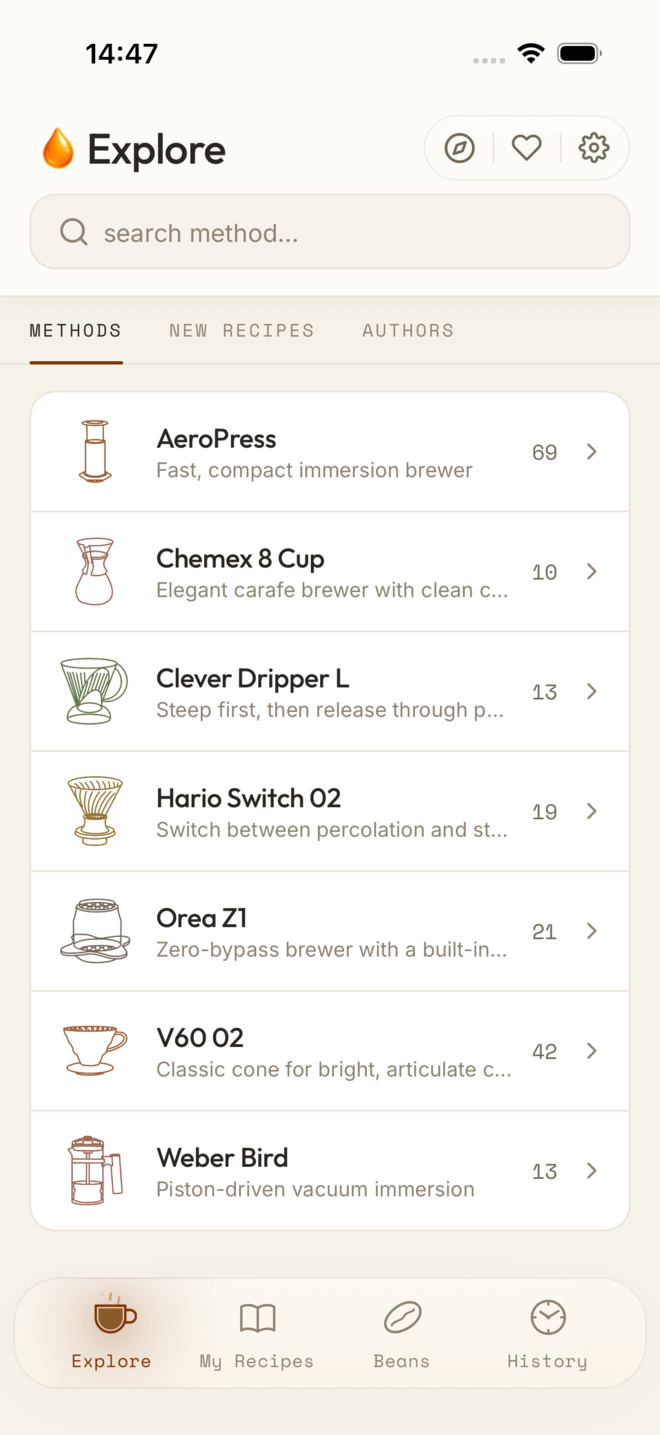
All 1022 curated recipes from 130 baristas — filterable by taste, time, and roast, saved offline, with your favorites and tasting notes alongside.
- Works offline — brew anywhere
- Filter by flavor, body, and roast
- Favorites and a tasting log
Free iOS No signup 1022 recipes by 130 baristas