Section
The bean
Every cup is half-decided before you grind. Origin, process, roast, days off-roast — none of it moves at the brewer. Learn to read what the bag already tells you and you stop blaming technique for what the green was always going to do.
5 Articles
Articles
Origin
Where the coffee grew shapes the cup more than almost anything else. Soil, altitude, climate, and varietal interact for the years the tree spends in the ground. Once the cherry is picked, the rest of the chain (processing, roast, brew) only modifies what's already there. You can't put fruit into a coffee that wasn't grown for it.
Intro
4 min
Processing
Coffee grows as a cherry. The bean you brew is the seed. Processing is everything that happens between picking the cherry and getting a dry green bean ready to ship — and it's the second-biggest flavor decision after origin. Two coffees from the same farm processed differently will taste like two coffees.
Intro
3 min
How coffee is roasted
Roasting is the chemistry that turns a green seed into something that tastes like coffee. A green bean is dense, vegetal, and sour — undrinkable in any meaningful sense. Heat applied for the right amount of time transforms it into the aromatic, brown, brewable thing on the shelf. Almost everything you taste in a finished cup was either created or shaped during the eight to fifteen minutes the bean spent inside a roaster.
Intermediate
7 min
Roast levels
Roasting is heat applied for time. Green beans go in tasteless and dense; out comes coffee. Where the roaster stops the process — measured in colour, time, and internal bean temperature — decides how much origin character survives versus how much "roasted coffee" character takes over.
Intro
3 min
Freshness and storage
The roast date on the bag is the most useful number printed on it. A bag's flavour changes more in its first month than at any other point in its life. Buying recent and storing it right is the cheapest upgrade you can make to your coffee.
Intro
4 min
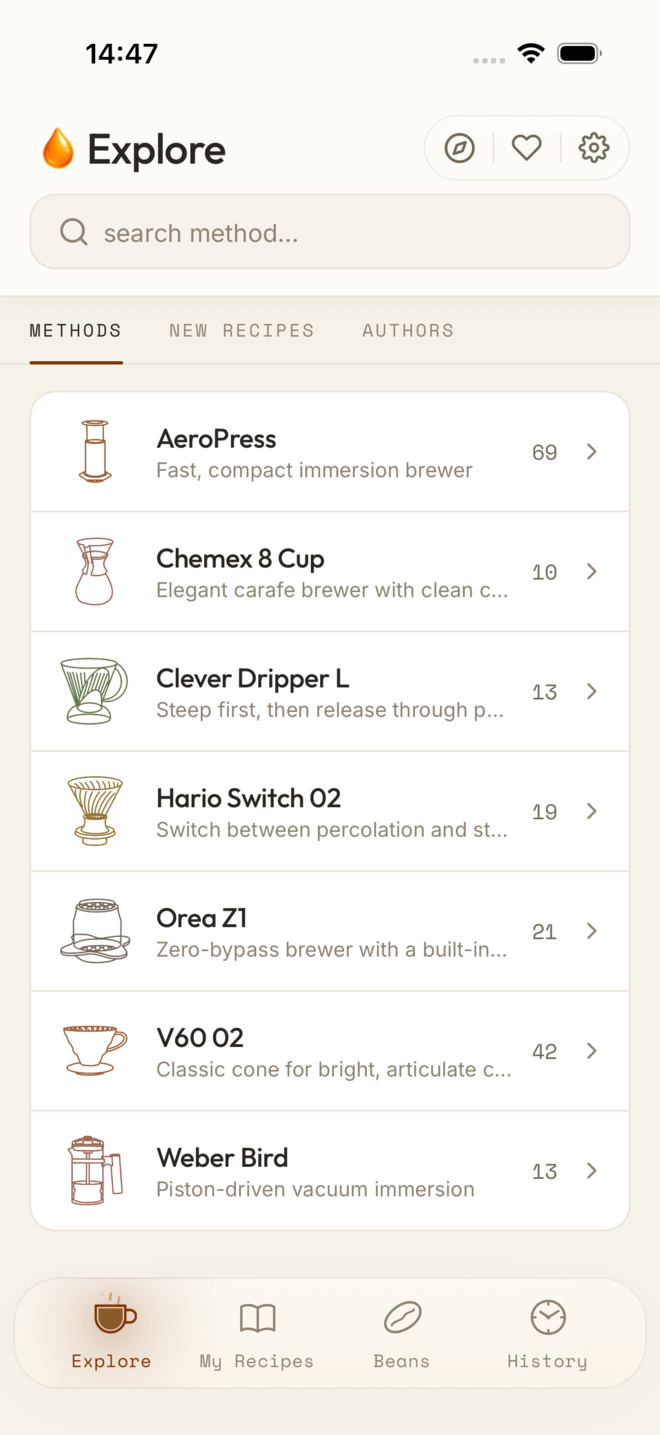
The whole library, offline
Every recipe here, in your pocket.
All 1022 curated recipes from 130 baristas — filterable by taste, time, and roast, saved offline, with your favorites and tasting notes alongside.
- Works offline — brew anywhere
- Filter by flavor, body, and roast
- Favorites and a tasting log
Free iOS No signup 1022 recipes by 130 baristas